running the following on a Heltec WiFi LoRa32 (V3)
// Heltek LoRa V3 LoRaWAN test - transmits packet every 60 seconds then sleeps

// ERRORS in library
// http://community.heltec.cn/t/solved-heltec-lora-v3-compiler-time-errors/18877
//edited sx126x.c line 9 replaced “ with ", i.e. #include “Arduino.h“ with #include “Arduino.h”
//edited sx1262-board.c retyped … in line 34 extern void lora_printf(const char *format, …);

// see https://github.com/HelTecAutomation/Heltec_ESP32/blob/master/examples/LoRaWAN/LoRaWan/LoRaWan.ino

/* Heltec Automation LoRaWAN communication example
 *
 * Function:
 * 1. Upload node data to the server using the standard LoRaWAN protocol.
 *
 * Description:
 * 1. Communicate using LoRaWAN protocol.
 *
 * HelTec AutoMation, Chengdu, China
 * 成都惠利特自动化科技有限公司
 * www.heltec.org
 *
 * */

#include "LoRaWan_APP.h"

/* OTAA para*/
uint8_t devEui[] = {xxxxxxxxxxxxxxxx };
uint8_t appEui[] = {xxxxxxxxxxxxxxxxxxx };
uint8_t appKey[] = { yyyyyyyyyyyyyyyy };

/* ABP para*/
uint8_t nwkSKey[] = { zzzzzzzzzzzzzzzzzz };
uint8_t appSKey[] = {zzzzzzzzzzzzzzzzzzz };
uint32_t devAddr =  ( uint32_t )zzzzzz;

/*LoraWan channelsmask, default channels 0-7*/
uint16_t userChannelsMask[6]={ 0x00FF,0x0000,0x0000,0x0000,0x0000,0x0000 };

/*LoraWan region, select in arduino IDE tools*/
LoRaMacRegion_t loraWanRegion = ACTIVE_REGION;

/*LoraWan Class, Class A and Class C are supported*/
DeviceClass_t  loraWanClass = CLASS_A;

/*the application data transmission duty cycle.  value in [ms].*/
uint32_t appTxDutyCycle = 60000;

/*OTAA or ABP*/
bool overTheAirActivation = true;

/*ADR enable*/
bool loraWanAdr = true;

/* Indicates if the node is sending confirmed or unconfirmed messages */
bool isTxConfirmed = true;

/* Application port */
uint8_t appPort = 2;
/*!
* Number of trials to transmit the frame, if the LoRaMAC layer did not
* receive an acknowledgment. The MAC performs a datarate adaptation,
* according to the LoRaWAN Specification V1.0.2, chapter 18.4, according
* to the following table:
*
* Transmission nb | Data Rate
* ----------------|-----------
* 1 (first)       | DR
* 2               | DR
* 3               | max(DR-1,0)
* 4               | max(DR-1,0)
* 5               | max(DR-2,0)
* 6               | max(DR-2,0)
* 7               | max(DR-3,0)
* 8               | max(DR-3,0)
*
* Note, that if NbTrials is set to 1 or 2, the MAC will not decrease
* the datarate, in case the LoRaMAC layer did not receive an acknowledgment
*/
uint8_t confirmedNbTrials = 4;

/* Prepares the payload of the frame */
static void prepareTxFrame( uint8_t port )
{
  /*appData size is LORAWAN_APP_DATA_MAX_SIZE which is defined in "commissioning.h".
  *appDataSize max value is LORAWAN_APP_DATA_MAX_SIZE.
  *if enabled AT, don't modify LORAWAN_APP_DATA_MAX_SIZE, it may cause system hanging or failure.
  *if disabled AT, LORAWAN_APP_DATA_MAX_SIZE can be modified, the max value is reference to lorawan region and SF.
  *for example, if use REGION_CN470,
  *the max value for different DR can be found in MaxPayloadOfDatarateCN470 refer to DataratesCN470 and BandwidthsCN470 in "RegionCN470.h".
  */
    appDataSize = 4;
    appData[0]++;// = 0x00;
    appData[1] = 0x01;
    appData[2] = 0x02;
    appData[3] = 0x03;
    Serial.printf("Sending %d  ", appData[0]);
}

//if true, next uplink will add MOTE_MAC_DEVICE_TIME_REQ


void setup() {
  Serial.begin(115200);
  Mcu.begin(HELTEC_BOARD,SLOW_CLK_TPYE);
}

void loop()
{
  switch( deviceState )
  {
    case DEVICE_STATE_INIT:
    {
#if(LORAWAN_DEVEUI_AUTO)
      LoRaWAN.generateDeveuiByChipID();
#endif
      LoRaWAN.init(loraWanClass,loraWanRegion);
      //both set join DR and DR when ADR off
      LoRaWAN.setDefaultDR(3);
      break;
    }
    case DEVICE_STATE_JOIN:
    {
      LoRaWAN.join();
      break;
    }
    case DEVICE_STATE_SEND:
    {
      prepareTxFrame( appPort );
      LoRaWAN.send();
      deviceState = DEVICE_STATE_CYCLE;
      break;
    }
    case DEVICE_STATE_CYCLE:
    {
      // Schedule next packet transmission
      txDutyCycleTime = appTxDutyCycle + randr( -APP_TX_DUTYCYCLE_RND, APP_TX_DUTYCYCLE_RND );
      LoRaWAN.cycle(txDutyCycleTime);
      deviceState = DEVICE_STATE_SLEEP;
      break;
    }
    case DEVICE_STATE_SLEEP:
    {
      LoRaWAN.sleep(loraWanClass);      // goto sleep - ESP32S3 in deep sleep
      break;
    }
    default:
    {
      deviceState = DEVICE_STATE_INIT;
      break;
    }
  }
}
gives results
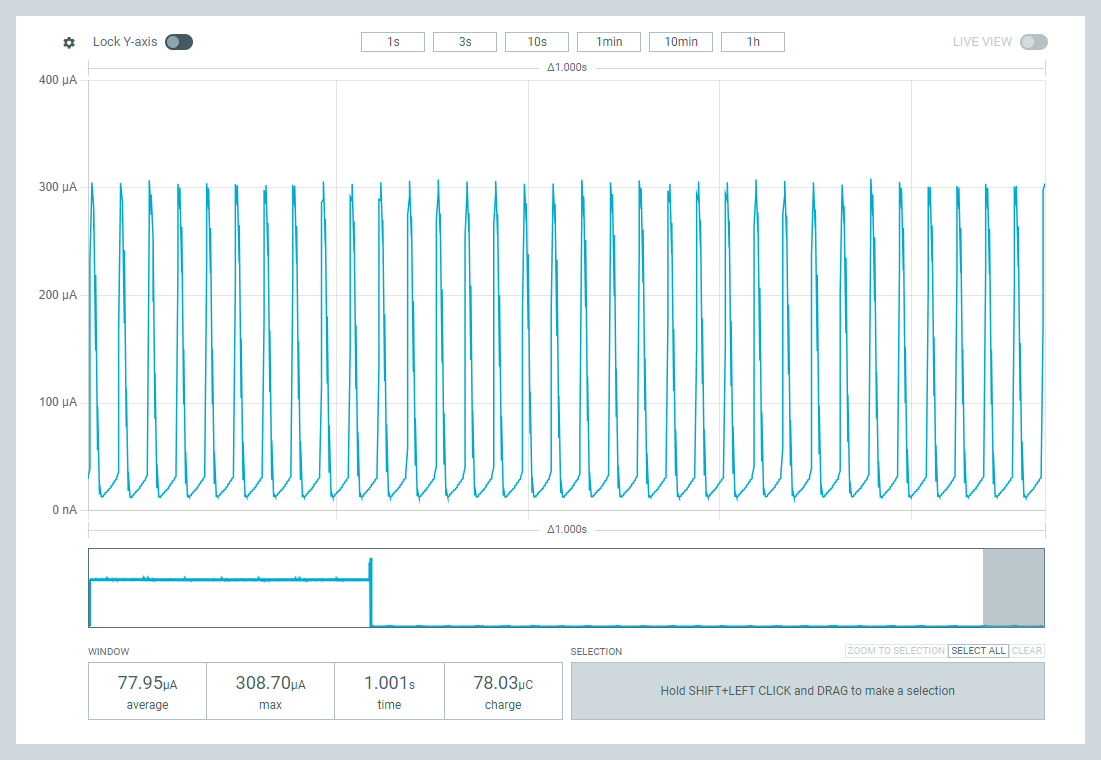
LoRaWAN joining transmitting etc 100mA
LoRaWAN.sleep() called 25uA
to measure microamp currents you need a good quality digital or analogue multimeter - I use an Avo 9mkII
EDIT: update using a Heltec WiFi32 LoRa V4 running above program
LoRaWAN joining transmitting etc 70mA
LoRaWAN.sleep() called 15uA
Note
in Tools menu select
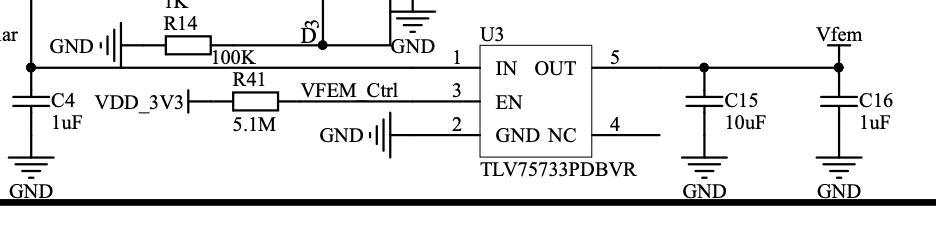
for V4.3 LoRa FEM Type select USE_KCT8103L_PA.
if USE_NONE_PA (default) deep sleep current is 9mA